
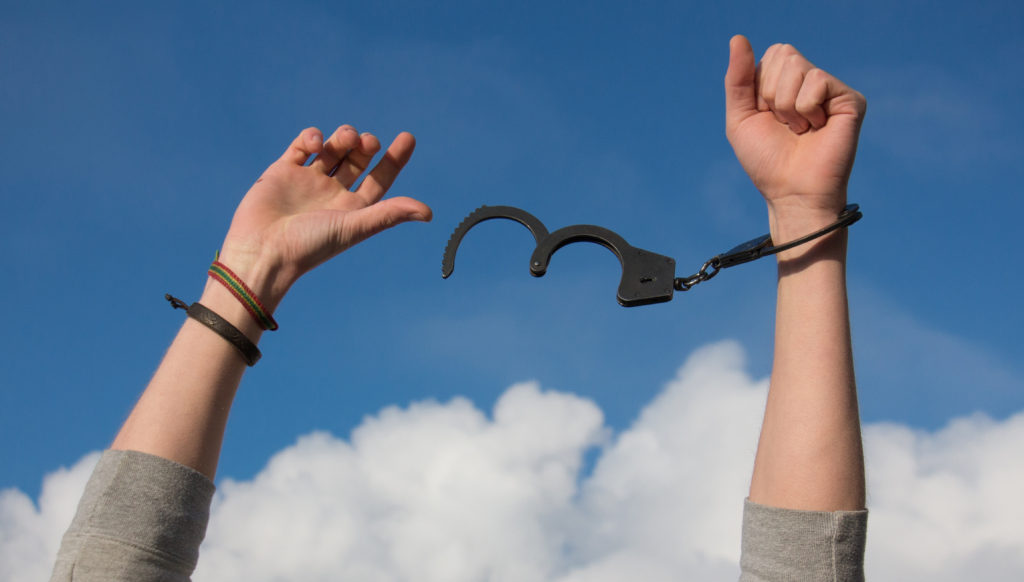
I am an addict. Maybe not the kind of addict who shoots dope in her veins but I am an addict nonetheless. I don’t remember when my life first started revolving around my next meal and I don’t remember when I stopped fully engaging in social and recreational events because of my addiction but sometime between the age of 32 and 49 I developed an addiction to food that would push me from a healthy, fit and athletic 125 lbs. to a morbidly obese 220 lbs.
As a social worker, I work with addicts daily. They tell me about their struggles to get help, stay clean and stop using. They describe to me a world full of judgmental people who offer them zero empathy or sympathy for their plight. They describe to me periods of sobriety consisting of 30, 60 and 90 days and then falling off the wagon over and over only adding to the enormous feelings of disgust they have about themselves. I nod my head and say “I understand.” Sometimes they call me out on it. “Do you really understand bitch?” One angry and aggressive client shouted at me. He has a point. Do I really understand?
Do I deeply understand my client’s addiction or am I just another hypocrite giving advice I cannot follow myself? Can I properly help someone with a heroin addiction and talk about “staying strong” when I broke my diet for the 100th time less than 48 hours from starting it?
Is an addiction to food even comparable to an addiction to heroin? Both addictions lead to poor health outcomes yet one is socially acceptable and the other pushes the person to the edge of societal norms often leaving the person homeless, without a job, broke and incarcerated with feelings of embarrassment and low self-worth. “How did I let this happen to myself” is what addicts often say to themselves. The risk of dying is real and daily but the pull of the drug is so powerful that not even the fear of death helps shake the addict from the clutches of the addiction.
Food addiction, on the other hand, leaves us feeling overweight, embarrassed, with feelings of low self-worth and putting us at risk for an early death due to co-morbid conditions ranging from high blood pressure, high cholesterol, sleep apnea, hernias, ulcers, GERD, heart attacks and strokes. The risk of dying is real and daily but we tell ourselves that we have more time than we actually do and our inner voice says “I will exercise tomorrow” as we finish off our fifth slice of pizza and gulp it down with a large coke.
I often tell my clients that addiction treatment calls for “radical change.” I use phrases like “make a choice today to take charge and get help” or “turn your struggle into your strength.” Sometimes, when I do my job really well, my clients are motivated and moving towards change and then I get the call telling me about a relapse, incarceration and sometimes death. I grieve with them. I feel exhausted with them. And yes, sometimes I do feel disgusted with them…”why can’t you just get your fucking shit together?” my inner voice shouts.
But I never give up on my clients. Never. Our job as social workers is to stay and fight. When everyone else has walked out, given up and ran from the room….we wait in the corner for you and say “ I understand.”
I am grabbing a pizza on my way home from work. I will probably eat a basket of cheesy bread as well. I might drink a few cokes. I’ll watch the news with my husband, gripe about the world and head to bed where my c-pap awaits me (without it my airway is at risk of collapsing due to my obesity).
Maybe tomorrow I will decide to embrace “radical change” or “turn my struggle into my strength.” But tonight, I am an addict.
I am not much different than my clients – our drug of choice is different but we each face the world getting our fix and risking death by the choices we make. When everyone else has walked out, given up and turned away…will you stay and fight?
Copyright By Teresa McIntosh Hall
Teresa McIntosh-Hall is a writer, blogger, social worker and political activist who decided to make a radical change and turn her struggle into her strength by having gastric sleeve surgery one week ago today.
Resources for food addiction:
https://www.weightwatchers.com/us/
https://www.mayoclinic.org/tests-procedures/bariatric-surgery/about/pac-20394258
I had a cousin who was morbidly obese ( 400 lbs). She died in 1998 after failing to lose 50 lbs so she could undergo the then current weight loss surgery. She had horrific asthma as well and lived on steroids to which her body had become addicted. Doctors tried to wean her off them but her lungs no longer functioned without the steroids.
So she passed away from multiple addictions. She was young, less than 50 yrs. She and her husband had adopted an adorable little boy from the Philippines, who was left motherless. A sad situation all around. She was an amazing person who had an addiction that no one could fix back then.
Penny, Thanks for sharing your story about your cousin. Obesity is the silent killer. It kills most of us and we deny the impact obesity has on our day to day health. I want to get healthy. It is tough! We all have a struggle and food addiction is REAL. May your cousin RIP. Thank you for reading my blog.
Well said Teresa. Your clients are lucky to have you.
Thank you Carroll. I am glad you reading my blog:)
I know the struggle personally and I must admit I never thought of it lime that but you’re absolutely right. Thanks for the insight.
Thanks for taking the time to read the blog Ed. I appreciate it.
Very well spoken Teresa! I love that you are doing this on your weight loss journey. You will be thankful for it all in the end. Keep pushing forward you got this!!
Thank you Erin. I appreciate your support.
Thank you for every other excellent post. Where else could
anyone get that kind of information in such a perfect way of writing?
I have a presentation next week, and I am on the search for such info.
Glad to help you. Have a great day.
Heya i’m for the first time here. I found this
board and I find It really useful & it helped me out a lot.
I hope to give something back and aid others like you aided me.